Resize Image by Percentage
Scale an image by a selected percentage.
Runs locally — files stay on your deviceWhat this tool does
Resize Image by Percentage provides a focused visual workflow for the operation described on this page. Selected images are previewed, processed in browser memory, and returned as a direct download or ZIP archive when multiple files are involved. Keep the original images and inspect dimensions, transparency, color, format support, and output quality before publishing or replacing production assets.
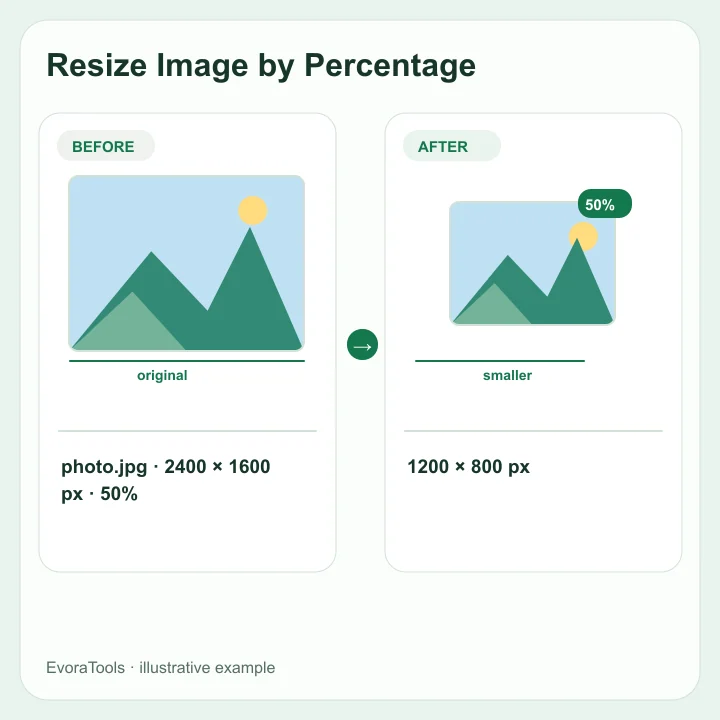
What is the quickest way to resize percent?
Enter Scale, run Resize Image by Percentage, and use the returned resize percent result.
Understanding resize
Image operations work with decoded pixels, dimensions, color channels, transparency, and an output encoding. Format, quality, and pixel size affect different aspects of the result. For this page, the specific intent is resize percent; that boundary distinguishes it from broader tools in Image.
How it works
The browser decodes the selected image, draws or transforms its pixels on a canvas, then creates a new downloadable image. Here, the relevant input is Scale, and the output is tailored to resize percent.
Key concepts
Resize Image by Percentage input and result
The input is Scale. The output represents resize percent, so review its format before reuse.
Why resize percent matters
A dedicated resize image by percentage workflow reduces ambiguity: the operation has one stated intent and does not silently perform unrelated changes.
When to use it
- Prepare an asset for a website or social platform when the goal is resize percent.
- Standardize dimensions or file format when the goal is resize percent.
- Make a controlled visual adjustment without uploading the source when the goal is resize percent.
When not to use it
- Keep the original because exported changes are not reversible.
- Do not confuse smaller dimensions with lower file size in every case.
- Check transparency and quality after changing format.
Worked examples
Typical resize task
- Input
Scale (%) = 15- Expected output
A resize percent result ready to review
This demonstrates the primary intent described by Resize Image by Percentage.
Resize Image by Percentage boundary check
- Input
Scale (%) = 0- Expected output
A validated resize percent result or a clear input error
Boundary values reveal the unit, syntax, range, and formatting assumptions specific to Resize Image by Percentage.
Using the Resize Image by Percentage output
- Input
Scale (%) = 15- Expected output
Output copied or downloaded for the destination system
The final destination determines the precision, format, and review needed after resize percent.
Common mistakes
Using the wrong resize input
Keep the original because exported changes are not reversible. Correction: Confirm that Scale matches the page labels.
Skipping review after resize percent
Do not confuse smaller dimensions with lower file size in every case. Correction: Compare the result with the original and its destination requirements.
Expecting Resize Image by Percentage to do more
Check transparency and quality after changing format. Correction: Use a related tool when the task extends beyond resize percent.
Best practices
- Keep an original copy before using Resize Image by Percentage.
- Use consistent input formats and units for resize percent.
- Review the Resize Image by Percentage result in the system where it will be used.
Related operations and differences
Resize Image by Longest Edge
Choose Resize Image by Longest Edge when you need to resize while constraining the longest image edge.; use Resize Image by Percentage specifically for resize percent.
Bulk Image Resizer
Choose Bulk Image Resizer when you need to resize several images to shared dimensions.; use Resize Image by Percentage specifically for resize percent.
Compare Images Side by Side
Choose Compare Images Side by Side when you need to place two images on a labeled comparison canvas.; use Resize Image by Percentage specifically for resize percent.
Resize Image for Instagram
Choose Resize Image for Instagram when you need to fit an image to an Instagram-ready canvas.; use Resize Image by Percentage specifically for resize percent.
Resize Image for LinkedIn
Choose Resize Image for LinkedIn when you need to fit an image to a LinkedIn-ready canvas.; use Resize Image by Percentage specifically for resize percent.
Resize Image for YouTube Thumbnail
Choose Resize Image for YouTube Thumbnail when you need to fit an image to a 1280×720 thumbnail canvas.; use Resize Image by Percentage specifically for resize percent.
Limitations and privacy
- Large decoded images can exceed available browser memory.
- Format encoding support and output quality depend on the browser.
Selected image pixels are processed locally in this browser and are not uploaded by this tool.
Frequently asked questions
What does Resize Image by Percentage do?
It scale an image by a selected percentage. The operation is limited to resize percent and does not infer requirements that are not shown.
What input should I use for resize image by percentage?
Use Scale in the units or format shown beside each field.
How should I interpret the Resize Image by Percentage result?
Treat the output as the direct result of resize percent. Check it in the destination context, especially when rounding, formatting, metadata, or irreversible file changes matter.
What limitations apply to Resize Image by Percentage?
Large decoded images can exceed browser memory even when the compressed file is small. Browser format support and canvas export behavior vary.