JPG to PDF
Arrange JPG images and combine them into a PDF.
Runs locally — files stay on your deviceWhat this tool does
JPG to PDF displays every selected image before creating one PDF page per image. Page dimensions follow the source image so the first release avoids hidden cropping or stretching. Keep the original document, inspect the generated result before sharing it, and use specialist software whenever legal, archival, print-production, or certification requirements extend beyond this focused workflow.
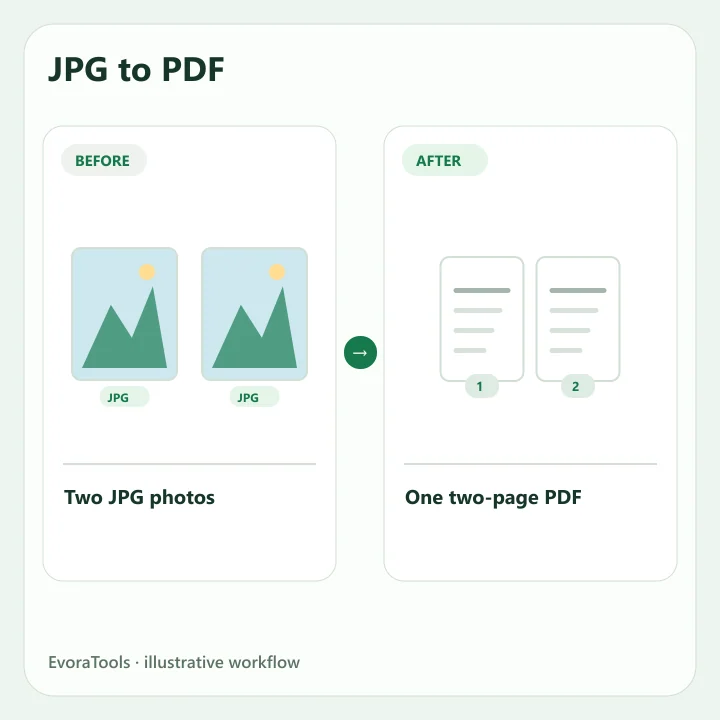
What is the quickest way to images to pdf?
Enter a selected local file, run JPG to PDF, and use the returned images to pdf result.
Understanding pdf
PDF files contain page objects and shared resources such as fonts, images, forms, links, and metadata. Page-level operations may preserve visible content without preserving every advanced document feature. For this page, the specific intent is images to pdf; that boundary distinguishes it from broader tools in PDF.
How it works
The selected document is loaded in browser memory, the requested page or metadata operation is applied, and a new PDF is created for download. Here, the relevant input is a selected local file, and the output is tailored to images to pdf.
Key concepts
JPG to PDF input and result
The input is a selected local file. The output represents images to pdf, so review its format before reuse.
Why images to pdf matters
A dedicated jpg to pdf workflow reduces ambiguity: the operation has one stated intent and does not silently perform unrelated changes.
When to use it
- Reorganize a document before sharing when the goal is images to pdf.
- Inspect pages or metadata without uploading the file when the goal is images to pdf.
- Create a focused PDF from existing material when the goal is images to pdf.
When not to use it
- Keep the original before deleting, cropping, flattening, or reordering pages.
- Verify forms, signatures, bookmarks, and annotations after processing.
- Select page ranges carefully because numbering starts at one in the interface.
Worked examples
Typical pdf task
- Input
Representative jpg to pdf input- Expected output
A images to pdf result ready to review
This demonstrates the primary intent described by JPG to PDF.
JPG to PDF boundary check
- Input
Input containing spaces, punctuation, or an edge case- Expected output
A validated images to pdf result or a clear input error
Boundary values reveal the unit, syntax, range, and formatting assumptions specific to JPG to PDF.
Using the JPG to PDF output
- Input
Input prepared for a downstream pdf workflow- Expected output
Output copied or downloaded for the destination system
The final destination determines the precision, format, and review needed after images to pdf.
Common mistakes
Using the wrong pdf input
Keep the original before deleting, cropping, flattening, or reordering pages. Correction: Confirm that a selected local file matches the page labels.
Skipping review after images to pdf
Verify forms, signatures, bookmarks, and annotations after processing. Correction: Compare the result with the original and its destination requirements.
Expecting JPG to PDF to do more
Select page ranges carefully because numbering starts at one in the interface. Correction: Use a related tool when the task extends beyond images to pdf.
Best practices
- Keep an original copy before using JPG to PDF.
- Use consistent input formats and units for images to pdf.
- Review the JPG to PDF result in the system where it will be used.
Related operations and differences
Images to PDF
Choose Images to PDF when you need to combine JPG, PNG and WebP images into one PDF.; use JPG to PDF specifically for images to pdf.
PDF to JPG
Choose PDF to JPG when you need to convert selected PDF pages into JPG images.; use JPG to PDF specifically for images to pdf.
PNG to PDF
Choose PNG to PDF when you need to arrange PNG images and combine them into a PDF.; use JPG to PDF specifically for images to pdf.
Add Header and Footer to PDF
Choose Add Header and Footer to PDF when you need to add reusable header and footer text to PDF pages.; use JPG to PDF specifically for images to pdf.
Add Image Watermark to PDF
Choose Add Image Watermark to PDF when you need to overlay an image watermark on every PDF page.; use JPG to PDF specifically for images to pdf.
Compare Two PDF Files
Choose Compare Two PDF Files when you need to compare two PDFs by pages and extracted text.; use JPG to PDF specifically for images to pdf.
Limitations and privacy
- Encrypted, damaged, or unusually complex PDFs may not load.
- Digital signatures and advanced interactive features may not survive creation of a new document.
The PDF is read and processed locally in this browser.
Frequently asked questions
What does JPG to PDF do?
It arrange JPG images and combine them into a PDF. The operation is limited to images to pdf and does not infer requirements that are not shown.
What input should I use for jpg to pdf?
Use representative input that matches the format described by the page and its file picker or text area.
How should I interpret the JPG to PDF result?
Treat the output as the direct result of images to pdf. Check it in the destination context, especially when rounding, formatting, metadata, or irreversible file changes matter.
What limitations apply to JPG to PDF?
Encrypted, damaged, or unusually complex PDFs may not load. Digital signatures and advanced interactive features may not survive creation of a new document.